 silicone@silic0ne.com
Let me tell you about the most frustrating object in your kitchen.
It’s not the dull knife that can’t slice a tomato. It’s not the blender with the missing lid. It’s the half-empty jar.
You know the one. It’s sitting in your refrigerator right now. Maybe it’s peanut butter. Maybe it’s Nutella. Maybe it’s that expensive organic tomato paste that cost $4.99 for a tiny little tube. You’ve used most of it. But there, clinging to the bottom and the sides, is a full tablespoon of perfectly good food.
You try to get it out. You shake the jar. You tap it on the counter. You wedge a butter knife in there, but the knife is too wide and too stiff. You scrape and scrape, but you can’t reach the curved bottom. You give up. You throw the jar in the recycling.
And as you watch that tablespoon of almond butter slide into the bin, you feel it: a tiny, quiet grief. That was money. That was food. That was effort.
Now multiply that feeling by every jar of pasta sauce, every pot of yogurt, every tub of moisturizer, every bottle of foundation you’ve thrown away over the last ten years. The waste is staggering. The cost is real.
But there is a solution. It’s small. It’s cheap. And it comes in a set of three.
Meet the 3-Piece Mini Silicone Spatula Set – the unsung hero of the waste-free kitchen (and bathroom, and makeup bag).
The Problem with Traditional Spatulas (And Butter Knives)
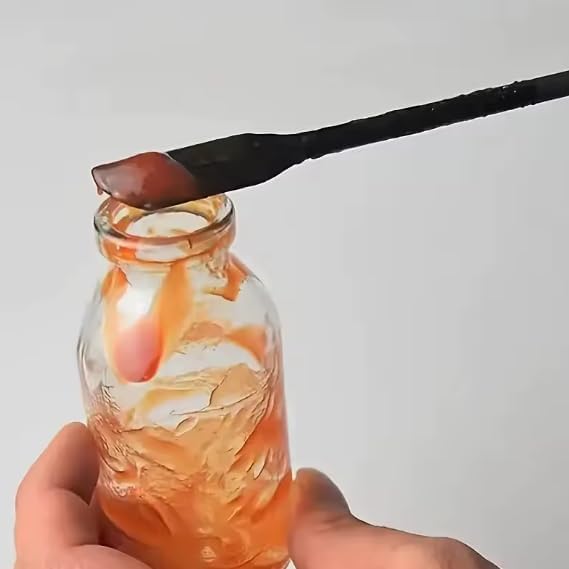
Before we sing the praises of these mini marvels, let’s acknowledge why you don’t already have a solution.
Standard spatulas are huge. They’re designed for flipping pancakes and scraping big mixing bowls. Try jamming one into a narrow-necked jar of honey. It doesn’t fit. You end up with honey on your knuckles and a spatula that’s now sticky on the outside.
Butter knives are rigid. They can’t bend around the curved bottom of a jar. You get a straight line of scrape, leaving two untouched crescents on either side. Plus, metal scratches glass and ceramic over time, leaving ugly marks.
Spoons are too round. They leave a ring of product around the edge. And the handle is useless for scraping.
Your finger? Please don’t. It’s unsanitary, it wastes product under your nail, and you can’t reach the bottom of a deep jar without getting your entire hand messy.
The world has been missing a tool specifically designed for the geometry of jars and bottles. Until now.
Enter the Mini Silicone Spatula: Three Sizes, Infinite Uses

This set contains three mini spatulas. They are not identical. Each one has a different size and shape, because different containers require different tools.
Spatula #1: The Narrow Scraper (For Small-Neck Bottles)
This one is long, slender, and slightly pointed. It is designed to slide into the neck of a standard hot sauce bottle, a vanilla extract bottle, or a narrow olive oil dispenser. The head is just wide enough to scrape the sides, and the tip reaches the very bottom corner.
Perfect for: Tabasco bottles, fish sauce, liquid stevia, essential oil bottles, nail polish (yes, really – more on that later), and any container with a mouth smaller than your thumb.
Spatula #2: The Wide Scoop (For Jars and Short Containers)
This one has a broader, slightly cupped head. It looks like a miniature version of a standard silicone spatula. It is ideal for jars that are wide but shallow – think peanut butter jars, yogurt pots, dip containers, and small Tupperware.
Perfect for: Peanut butter, Nutella, hummus, sour cream, jam jars, face cream pots, lip balm tubs, and any container where you need to scoop and spread.
Spatula #3: The Angled Taper (For Curved Bottoms and Corners)
This one has a unique angled head that bends slightly. It is specifically designed to reach the curved bottom of round jars and the 90-degree corners of square containers. The angle means you can hold the spatula vertically while the head presses flat against the bottom curve.
Perfect for: Mayonnaise jars, pasta sauce jars, honey bears (the plastic kind with the narrow top and wide bottom), and any container with a tricky interior geometry.
Between these three shapes, there is virtually no container you cannot empty completely. We’re talking 99% evacuation. What’s left is a microscopic film that you can rinse out. You will be shocked at how much product you’ve been throwing away.
The Economics of the Last Scrape: How Mini Spatulas Pay for Themselves
Let’s do some math. I’m going to use real numbers from a real household.
Peanut butter: A 16 oz jar costs about $4.50. The average person leaves about 1.5 tablespoons in the jar because it’s too hard to scrape. That’s roughly 10% of the jar. Over 12 jars a year, that’s $5.40 of peanut butter in the trash.
Honey: A 12 oz squeeze bear costs $6.00. Honey is thick and sticky. You leave about 1 tablespoon clinging to the sides and bottom. That’s about 5% of the jar. Over 6 jars a year, that’s $1.80.
Nutella: A 13 oz jar costs $5.00. Nutella is a cult favorite, and the jar shape is notoriously hard to scrape. People leave a shocking amount – easily 2 tablespoons. That’s about 10% again. Over 4 jars a year, that’s $2.00.
Tomato paste: Those tiny 4.5 oz cans (or tubes) cost $1.50 each. You usually need 1 tablespoon for a recipe, but the can holds 5 tablespoons. You throw the rest away because transferring it to a container is a pain. A mini spatula lets you scrape the entire can into a small jar for later. Savings: $1.50 per can, times 10 cans a year = $15.00.
Face moisturizer: A 1.7 oz jar of mid-range cream costs $25.00. When you think it’s “empty,” there is usually about 10% left clinging to the bottom and sides. That’s $2.50 per jar. Over 4 jars a year = $10.00.
Foundation: A 1 oz bottle of good foundation costs $40.00. When the pump stops working, there’s often a full week’s worth of product stuck to the inside walls. A mini spatula can rescue that. Savings: $4.00 per bottle, times 3 bottles a year = $12.00.
Add it up: Peanut butter ($5.40) + honey ($1.80) + Nutella ($2.00) + tomato paste ($15.00) + face cream ($10.00) + foundation ($12.00) = $46.20 per year in easily recoverable product.
And that’s just the categories I bothered to calculate. Add in jam, mayonnaise, mustard, barbecue sauce, salad dressing, body lotion, hair mask, and all the other things that come in jars. You’re easily saving $75–$100 per year.
The mini spatula set costs about $10–$15. It pays for itself in two months. Everything after that is pure profit.
But Wait: These Aren’t Just for Jars
The product description mentions “perfect for cooking, baking, makeup.” Let me expand on that, because once you own these three little tools, you will find a hundred uses for them.
In the Kitchen (Cooking & Baking)
Scraping bowls: You just made a cake batter. You pour it into the pan. There’s still a quarter cup of batter stuck to the sides of the mixing bowl. The mini spatula (especially the wide scoop) fits perfectly against the curved wall of the bowl. You scrape every drop into the pan. Your cake is now 10% bigger. Zero waste.
Spreading frosting: A standard offset spatula is great for large cakes. But for cupcakes, cookies, or the sides of a small layer cake, the mini spatula is perfect. The flexible head lets you smooth frosting into corners without tearing the cake.
Getting the last bit of condiments: This is the obvious one. But think beyond peanut butter. Mayonnaise jars. Mustard jars. Relish. Pickle juice (for brining chicken – scrape those last pickles out!). Sun-dried tomatoes in oil. Pesto. The list is endless.
Working with hot ingredients: These spatulas are heat-resistant up to 446°F (230°C) . That means you can use them in a hot pan. Stirring caramel? No problem. Flipping a delicate fried egg? The mini spatula is the perfect size. Scraping melted chocolate out of a double boiler? Safe and effective. Unlike cheap plastic spatulas that melt or wooden spoons that burn, these silicone tools handle high heat with ease.
Making small batches: Cooking for one? The mini spatula is the perfect size for scraping a single-serving omelet out of a small pan, or stirring a personal-sized pot of oatmeal.
Removing food from cans: Canned chipotle peppers in adobo sauce. Canned coconut milk (the thick cream that sticks to the top). Canned pumpkin puree. A mini spatula gets every last bit out without cutting your fingers on the sharp lid edges.
In the Bathroom (Skincare & Cosmetics)
This is where the mini spatula set truly shines as a “beauty tool” that most people don’t know they need.
Face cream jars: You know that expensive moisturizer that comes in a heavy glass jar? When you think it’s empty, use the narrow scraper to dig into the corners. You will get another 3-5 days of use. I promise.
Lip balm pots: Those little round tins of Burt’s Bees or DIY lip balm? The wide scoop is the exact size to scrape out the last bit without getting it under your fingernails.
Foundation bottles: When your foundation pump starts sputtering, unscrew the top. Use the long narrow spatula to scrape down the sides. You will often find a full week’s worth of product clinging to the inner walls.
Mascara tubes (hack): When your mascara seems dry, use the narrowest spatula to scrape the sides of the tube. Mix the product with a drop of contact lens solution. You just revived a $25 mascara for another two weeks.
Face masks: Clay masks, peel-off masks, gel masks – they all come in jars. Use the wide scoop to apply the mask evenly (or use the dedicated mask applicator from our previous article, but if you don’t have that, this works fine).
Hair masks and deep conditioners: These often come in tubs with thick, creamy formulas. A mini spatula gets every last bit out, and it’s more hygienic than dipping your fingers in.
Lotion pumps: When the pump stops pulling lotion, there’s still a surprising amount at the bottom. Unscrew the pump and use the angled spatula to scrape it into a small travel jar.
In the Craft Room (DIY & Hobbies)
Paint jars: Acrylic paint, watercolor, oil paint – all expensive. Use a mini spatula to scrape the last bits from the bottom of the jar.
Glue bottles: White glue, super glue (be careful!), mod podge. A spatula helps you use every drop.
Epoxy resin: Resin is expensive and messy. A mini spatula is perfect for stirring small batches and scraping the mixing cup clean.
Lipstick making: If you make your own cosmetics (lip balm, tinted moisturizer), these spatulas are essential for transferring hot liquid into containers.
In the Workshop (Lubes, Adhesives, and More)
Grease and lubricants: For the mechanically inclined, a mini spatula is perfect for scraping the last bit of bearing grease out of a tub without getting your hands filthy.
Wood glue: Same principle. Don’t waste expensive Titebond.
Caulk and sealant: For small touch-up jobs, a mini spatula can smooth caulk into cracks.
The Material: Heat-Resistant, Food-Grade Silicone
Let’s talk about what these spatulas are actually made of, because material quality matters – especially when you’re using them on hot pans or putting them in your mouth (if you lick the spatula – no judgment).
100% Food-Grade Silicone
This means:
- Non-toxic: No BPA, no phthalates, no lead, no PVC. Safe for direct contact with food, even at high temperatures.
- Odorless and tasteless: Unlike cheap silicone or rubber, food-grade silicone does not transfer weird smells or flavors to your food. Your peanut butter will taste like peanut butter, not like spatula.
- Hypoallergenic: Safe for people with latex allergies or sensitive skin.
Heat Resistant Up to 446°F (230°C)
This is a critical feature. Many cheap mini spatulas are made of nylon or low-grade silicone that melts at 350°F. You cannot use them in a hot pan. These spatulas can handle:
- Boiling water (212°F)
- Simmering sauces (around 200°F)
- Caramel (320°F – be careful, that’s hot!)
- Frying eggs (250–300°F)
- Baking (most ovens max out at 450°F, so these are safe for stirring on the stovetop)
The only thing you shouldn’t do is leave them sitting in a deep fryer (350–375°F for extended periods might eventually degrade silicone, but for quick scraping, it’s fine).
Flexible but Durable
The heads are soft and flexible. This is intentional. A rigid spatula cannot conform to the curved bottom of a jar. The flexibility allows the spatula to bend and press against every contour, scraping product from surfaces that rigid tools miss.
But flexible doesn’t mean flimsy. These spatulas are thick enough that they won’t tear or break under normal use. You can scrape with moderate force without worrying about the head snapping off.
Non-Scratch
Because the silicone is soft, it will not scratch:
- Non-stick pans (unlike metal spatulas)
- Glass jars (unlike metal knives)
- Ceramic bowls
- Plastic containers
- Your expensive stand mixer bowl
You can scrape aggressively without leaving ugly marks. This is especially important for non-stick cookware, where metal utensils destroy the coating.
Easy to Clean & Store (Because Nobody Has Time for High-Maintenance Tools)
Let’s be honest: If a kitchen tool is hard to clean, you won’t use it. It will sit in a drawer, guilty and unused.
These mini spatulas are the opposite of high-maintenance.
Dishwasher Safe
Toss them in the top rack of your dishwasher. The silicone does not absorb water or detergent. They come out sparkling. No weird residue. No need to dry them immediately.
Hand-Washing Is Even Easier
Rinse under hot water. Add a drop of soap. Rub the head with your fingers. Rinse. Done. Ten seconds. Because silicone is non-stick, food and cosmetics slide right off. Unlike wooden spoons that absorb stains or metal spatulas that require scrubbing, these clean instantly.
Stubborn Residue?
If you’ve been scraping something greasy (peanut butter, coconut oil, lotion), use a little dish soap and hot water. For makeup (foundation, concealer), a dab of makeup remover or oil cleanser works wonders. But honestly, hot water and soap are usually enough.
Storage: The Hanging Hole
Each spatula has a small hole at the end of the handle. This is for hanging. You can:
- Hang them on a small hook inside a cabinet door.
- Thread a string or ring through them to keep the set together.
- Hang them on a magnetic strip (though they’re not magnetic – the hole is for hooks).
- Store them in a utensil crock (they’re short enough to fit).
Because they’re small, they also fit easily in a drawer. They don’t take up much space. You can tuck them into a silverware organizer, a makeup brush holder, or a pencil cup.
A Day in the Life with Your Mini Spatula Set
Let me show you how these three little tools integrate into a normal day.
7:00 AM – Breakfast
You make peanut butter toast. You open a jar of peanut butter that’s down to the last quarter inch. You grab the wide scoop spatula. One scrape around the bottom, and you have enough peanut butter for two slices of toast. You rinse the spatula under hot water. Done.
12:00 PM – Lunch
You’re making a salad dressing with the last of a honey jar. The honey is crystallized and stuck to the sides. You use the narrow spatula to scrape it all out. You get two full teaspoons. You mix it with mustard and vinegar. Perfect dressing. No waste.
3:00 PM – Snack
You have a small pot of Greek yogurt. The wide scoop gets every bit out. You eat it with a spoon, but the spatula did the scraping.
6:00 PM – Dinner
You’re making tomato sauce from a jar of passata. The jar is almost empty, but there’s a good 2 tablespoons clinging to the glass. You use the angled taper spatula to reach the curved bottom. You add it to the sauce. More flavor, less waste.
8:00 PM – Skincare
You finish your night cream. You think it’s empty. You use the narrow spatula to dig into the corners of the jar. You get enough cream for three more nights. You transfer it to a small travel pot. You just saved $2.50.
9:00 PM – Cleanup
You put all three spatulas in the dishwasher. Or you rinse them in five seconds. Either way, they’re ready for tomorrow.
Comparison: Cheap Spatulas vs. This Set
I’ve seen the “mini spatulas” at discount stores. They come in a pack of one, usually bright red or blue, and they cost $1.99. Here’s why they’re not the same:
| Feature | Cheap Spatula | This 3-Piece Set |
|---|---|---|
| Heat resistance | Often unknown (maybe 200°F) | 446°F guaranteed |
| Material quality | May contain fillers or BPA | 100% food-grade silicone |
| Number of sizes | One | Three (narrow, wide, angled) |
| Flexibility | Often too stiff or too floppy | Perfect balance |
| Non-scratch | Usually yes, but check | Guaranteed |
| Dishwasher safe | Maybe, but may degrade | Yes |
| Hanging hole | Rare | Yes, on all three |
| Makeup use | Not designed for it | Perfect for jars & pots |
| Value | $2 for one | $12 for three ($4 each) |
The cheap spatula is fine for one or two uses. But it will melt if you touch a hot pan. It will absorb smells. It will crack after a few months. This set lasts for years.
Who Needs This Set?
The home baker: You scrape bowls, frosting, and batter constantly. You need a small spatula for cupcakes and small pans.
The zero-waste enthusiast: You hate throwing away food. You want to scrape every jar clean before recycling it.
The budget-conscious cook: You’ve done the math (like I did) and realized that wasted product costs you real money.
The makeup lover: You own expensive foundation, concealer, and face cream. You want to use every drop.
The small-space dweller: You have a tiny kitchen with limited drawer space. Three mini spatulas take up almost no room.
The DIY crafter: You work with paints, glues, resins, or cosmetics. You need precise, small-scale scraping tools.
The parent of young kids: You make baby food in small batches. You scrape every bit of puree out of the blender and into the storage jar.
The camper or RV traveler: Space is at a premium. These spatulas are lightweight, multi-functional, and easy to clean with limited water.
Frequently Asked Questions
Q: Are these safe for non-stick pans?
A: Yes. Silicone is non-scratch. Use them in your expensive non-stick skillet without worry.
Q: Can I use them with boiling liquids?
A: Yes, up to 446°F. Boiling water is 212°F. You’re well within the limit.
Q: Will they stain from tomato sauce or turmeric?
A: Silicone is naturally stain-resistant. However, highly pigmented foods (turmeric, tomato, beet) may leave a faint tint if left in contact for a long time. Wash promptly after use. If staining occurs, soak in a solution of baking soda and water, or leave in direct sunlight for a few hours – the UV light bleaches silicone.
Q: Can I cut with them?
A: No. These are spatulas, not knives. The silicone is soft and will not cut anything. Use a knife for cutting, then use the spatula for scraping.
Q: Are they BPA-free?
A: Yes. 100% food-grade silicone contains no BPA, phthalates, or PVC.
Q: How do I get smells out (if I use them with garlic or onion)?
A: Silicone is naturally odor-resistant, but strong smells can linger. To remove odors: soak in a 50/50 mixture of white vinegar and water for 30 minutes, then rinse. Or bake in the oven at 250°F for 20 minutes (silicone is heat-safe, but check that your oven is clean first).
Q: Can I put them in the microwave?
A: Yes. Silicone is microwave safe. However, the spatulas themselves don’t need to go in the microwave – you would use them to stir food that’s already in a microwave-safe bowl. But if you accidentally leave one in there, it won’t spark or melt.
Q: What’s the difference between the three spatulas? Can I just buy one?
A: You could, but you’d be missing the specific shapes. The narrow one is for small-neck bottles (hot sauce, vanilla extract). The wide one is for jars (peanut butter, face cream). The angled one is for curved bottoms (pasta sauce jars, honey bears). The set of three covers 100% of container types. One spatula covers maybe 60%.
The Environmental Case: Less Waste, Less Packaging
Beyond the money savings, there’s a bigger reason to use these spatulas: the planet.
Every time you throw away a jar with product still inside, that food ends up in a landfill. When food decomposes anaerobically (without oxygen, which is the case in most landfills), it produces methane – a greenhouse gas 25 times more potent than carbon dioxide.
By scraping your jars clean, you’re not just saving money. You’re reducing the organic waste sent to landfills. You’re also reducing the demand for new product, because you’re using every bit of what you already bought. Less manufacturing. Less transportation. Less packaging.
And because these spatulas are reusable for years (decades, honestly), you’re not buying disposable scrapers or wasting paper towels trying to wipe out jars. It’s a small change, but millions of households doing this adds up.
The Verdict: Three Tiny Tools, One Giant Impact
We live in a world of disposable everything. Single-use plastic. Planned obsolescence. It’s easy to feel like our small actions don’t matter.
But scraping a jar clean? That matters. It matters to your wallet. It matters to your conscience. And it matters to the planet.
The 3-Piece Mini Silicone Spatula Set is not a glamorous product. It will not impress your dinner guests. You will not post it on Instagram (though you could – #jarscraping is a thing, I promise).
What it will do is quietly, reliably, day after day, save you money and reduce waste. It will sit in your kitchen drawer, waiting for the moment you open a nearly-empty jar of almond butter and think, “Ugh, how do I get this out?”
And then you’ll remember. You’ll reach for the narrow spatula, or the wide scoop, or the angled taper. You’ll scrape. You’ll get every last bit. You’ll feel a small surge of satisfaction.
And you’ll wonder why you didn’t buy these years ago.
So here’s my advice: Stop throwing away your money. Stop scratching your jars with butter knives. Stop using your fingers.