 silicone@silic0ne.com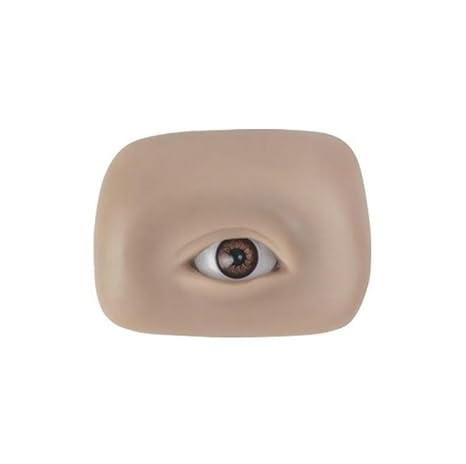
Every great artist needs a canvas. A painter has paper. A sculptor has clay. But for a microblading artist or an eyelash extension technician, the canvas is a human face – specifically, the delicate, expressive, terrifyingly small area around the eyes.
When you are learning, the thought of working on a live model is exhilarating and paralyzing in equal measure. Your hands shake. Your heart races. What if you slip? What if the eyelash glue gets into their eye? What if your microblading stroke is one millimeter too deep?
This is why every serious beauty professional – from beginners practicing for certification to seasoned artists refining new techniques – needs a 3D Silicone Fake Eye Model. It is the patient, silent teacher that never blinks, never flinches, and never complains. It allows you to make your mistakes where they don’t matter so that when you work on real clients, you make none.
Let me show you why this simple pair of silicone eyes mounted on a practice board is the most underrated tool in the beauty industry.
Realistic Models: Training That Actually Transfers to Real Skin

The biggest problem with most practice tools is that they are not realistic enough. Cheap plastic mannequin heads have hard, unforgiving surfaces that feel nothing like human skin. Flat paper practice sheets cannot simulate the curvature of an actual eye. You practice for hours, but the moment you face a real person, your technique falls apart because the conditions are completely different.
The 3D Silicone Fake Eyes solve this problem. These are not flat stickers or hard plastic molds. They are three-dimensional, anatomically shaped silicone models that mimic the structure of the human eye and the surrounding orbital area.
Let’s break down what “realistic” means in this context:
Realistic curvature. The human eye is not a flat circle. It is a sphere that protrudes from the eye socket, with subtle contours around the brow bone, the tear duct, and the outer corner. Our silicone model captures this curvature. When you practice eyelash extension isolation or microblading hair strokes, the angle of your tweezers or blade matters. On a flat surface, you learn bad habits. On this 3D model, you learn the correct wrist and hand positioning that will work on a real client.
Realistic texture. The silicone surface is soft, smooth, and slightly elastic – very similar to human skin. It has a subtle “give” when you press down, just like real tissue. This is critical for microblading practice. A rigid surface does not teach you how much pressure to apply. Too much pressure on real skin causes blowouts (pigment spreading under the skin). Too little pressure means the pigment won’t hold. Our silicone model provides realistic resistance, so you develop the perfect touch.
Realistic size. Many practice heads are oversized or cartoonish. These silicone eyes are true-to-life scale. The distance between the lash line and the brow, the curve of the eyelid, the depth of the crease – all are accurately proportioned. What you practice on this model is exactly what you will encounter on a client.
And because the models come as a pair (left and right eye), you can practice symmetry. Microblading eyebrows requires mirror-image precision. Lash extensions require consistent technique on both eyes. Having both eyes allows you to train your brain to work evenly.
Material: Soft, Smooth, Elastic, and Easy to Clean

The material is the heart of this product. Cheap practice skins are made of low-grade silicone or rubber that tears easily, stains permanently, or feels like a pencil eraser. Our models are made of premium silicone with specific properties designed for professional training.
Softness. Silicone is soft enough to mimic the compliance of skin without being so soft that it tears under your tool. When you practice microblading, the blade should glide smoothly without excessive drag. The softness of our silicone allows the blade to cut cleanly, producing visible hairlike strokes that you can evaluate.
Smoothness. The surface is perfectly smooth, which is essential for eyelash extension practice. On real clients, you need to isolate a single natural lash without sticking to adjacent lashes. A textured or rough practice surface makes isolation artificially difficult (or artificially easy, depending on the texture). Our smooth silicone provides a neutral, realistic surface where your tweezers can slide and grip accurately.
Elasticity. When you press on silicone, it bounces back. This is important because human skin also has elasticity. Practicing on a material that retains dents or impressions teaches you nothing about how real skin behaves. Our silicone model returns to its original shape after every stroke, allowing you to practice repeatedly on the same spot.
Easy to clean. Silicone is non-porous. After practicing with adhesives, pigments, or inks, you can simply wipe the surface with a damp cloth or alcohol wipe. Unlike fabric or paper practice sheets that are single-use, this silicone model can be cleaned and reused hundreds of times. That is not just convenient – it is economical and environmentally friendly.
Practice Board: Stability Meets Realism

The eyes come mounted on a skin-toned practice board. This is not an afterthought; it is a deliberate design feature that solves a major training problem.
When you practice on a loose silicone eye, it moves. You hold it with one hand and try to work with the other, but it squirms and slides. That instability forces you to compensate with awkward postures, and you develop habits that do not translate to a live client (who, ideally, is lying still on a treatment bed).
The practice board anchors the silicone eyes in a stable, flat base. You can set it on a table, tilt it at a comfortable angle, and work with both hands free. This mimics the actual working conditions of a lash or brow artist, where the client’s head is supported and stable.
The board is also skin-toned. Why does that matter? Because when you practice microblading, you need to see how pigment looks against a flesh-colored background. A white or black board distorts your perception of color and contrast. A skin-toned board gives you honest feedback. Is that brown pigment too warm? Too ashy? Too dark? You can judge accurately because the background is realistic.
Wide Application: One Tool, Multiple Techniques
A common frustration for beauty students is the accumulation of single-purpose tools. One practice head for lashes. One silicone sheet for brows. One fake skin for tattooing. Your kit becomes cluttered, and you never master any single tool because you are constantly switching.
The 3D Silicone Fake Eye Model is versatile. It supports at least five different techniques:
1. Eyelash Extension Application. This is the primary use. The model has a defined lash line with subtle ridges that simulate the natural lashes (though actual lashes are not attached; you will use practice lashes or individual extension lashes). You can practice isolation, direction, and attachment. The curvature of the eye means you must rotate your tweezers differently for inner, middle, and outer corners – exactly as you would on a real client.
2. Grafting False Eyelashes (Strip Lashes). Before you master individual extensions, you need to learn strip lash application. The silicone model allows you to practice measuring, trimming, applying adhesive, and placing the strip precisely along the natural lash line. Because the model is washable, you can do this dozens of times without ruining it.
3. Eyebrow Microblading. This is where the 3D aspect shines. Microblading requires you to follow the natural arch of the brow bone. On a flat surface, you lose that anatomical reference. The silicone model has a defined brow ridge that guides your stroke direction. You can practice hair strokes, shading, and symmetry across the pair of eyes.
4. Eyeliner Microblading (or Permanent Eyeliner Tattoo). This is an advanced technique that many artists are afraid to attempt on live clients because of the proximity to the eye. The silicone model provides a safe, low-stakes environment to practice tight-line work, wing placement, and depth control. You can see exactly where the pigment goes and adjust your technique before ever touching a real eyelid.
5. Tattoo Practice (General). For artists learning machine tattooing or permanent makeup, the silicone surface accepts pigment well and allows you to practice needle depth and hand speed. The elastic nature of silicone gives feedback similar to human skin (though no synthetic material is perfect – but this comes close).
For beginners, this range of applications means you can buy one practice tool and learn multiple skills. For experienced artists, it means you have a reliable test surface for new pigments, new needles, or new techniques before you offer them to paying clients.
Nice Packaging: Professional Presentation

The product comes as 1 pair (2 pieces) of fake eye models, each individually packaged in its own bag.
Why does packaging matter for a practice tool? Two reasons.
First, hygiene and protection. Silicone is durable, but it can collect dust or transfer oils during shipping. Individual bags keep each eye model clean and pristine until you are ready to use them. If you only need one eye for a specific practice session, the other remains sealed and protected.
Second, organization. Professional artists appreciate thoughtful packaging because it helps them keep their kits tidy. The individual bags can be reused to store the eyes between practice sessions, preventing them from rubbing against other tools and accumulating residue.
The packaging also makes this product gift-ready. Are you a beauty school instructor looking for training aids for your students? This set arrives in nice, presentable condition. Are you a parent of a aspiring lash artist? These make a thoughtful, practical gift that shows you understand their passion.
Why Beginners Need This (Before Their First Live Model)
Let me speak directly to the student who is about to take their certification exam or book their first practice model.
You are nervous. That is good. Nerves keep you careful. But nerves should not paralyze you. The only cure for nervousness is competence. And the only path to competence is repetition – dozens or hundreds of repetitions performed in a safe environment where mistakes have no consequences.
A live model is not a safe environment for mistakes. A live model has feelings. A live model can be injured. A live model will remember if you hurt them. That pressure changes your performance. You rush. You hesitate. You shake.
The silicone model feels no pain. The silicone model does not judge you. The silicone model lets you try the same lash isolation fifty times until your tweezers move automatically. It lets you practice your microblading hand speed until the strokes are perfectly uniform. It lets you experiment with different adhesive drying times without worrying about gluing someone’s eye shut.
By the time you work on a live model, you should have completed at least 20–30 full practice sessions on silicone. Your hands will know what to do. Your anxiety will be manageable because you have done this before – not on a flat paper sheet, but on a realistic 3D structure.
Your first live client deserves your best. Give them your best by practicing on silicone first.
Why Experienced Artists Also Need This

Perhaps you are already a certified lash artist. You have paying clients. You are confident in your skills. Why would you need a practice eye?
Three reasons.
First, skill maintenance. Techniques change. New products arrive. If you take a month off (maternity leave, vacation, illness), your muscle memory degrades. A quick practice session on silicone lets you recalibrate before returning to clients.
Second, new technique development. Want to offer a new style – like a “wet look” or a “manga lash”? Practice it on silicone first. Want to experiment with a different microblading needle configuration? Test it on silicone. Do not use paying clients as your laboratory.
Third, photography and portfolio building. Silicone eyes photograph beautifully. You can use them to create consistent, professional portfolio images of your lash or brow work without needing to schedule and light a live model. The neutral skin tone of the practice board provides a perfect background for showcasing your artistry.
How to Care for Your Silicone Fake Eyes
To maximize the lifespan of your practice eyes (they should last for hundreds of sessions), follow these simple guidelines:
After each use: Wipe away adhesive, pigment, or ink with a damp cloth or an alcohol wipe. Do not use acetone or harsh solvents, as these can degrade silicone over time.
For deep cleaning: Wash with mild soap and warm water. Rinse thoroughly. Pat dry with a lint-free cloth.
Storage: Keep the eyes in their individual bags or in a clean, dry case away from direct sunlight and extreme heat. Do not store them pressed against other silicone products, as some silicones can bond together.
Do not: Use sharp blades to cut the silicone (microblading blades are fine for surface strokes, but do not try to carve into the material). Do not leave adhesive to cure overnight – it will become difficult to remove. Do not use oil-based products, as oils can stain silicone.
With basic care, one pair of silicone eyes can support your entire training journey – from first tentative stroke to professional certification and beyond.
The Ethical Advantage: Practice Without Exploitation
There is an uncomfortable truth in the beauty training industry. Many students practice on friends or family members who feel pressured to say yes. Or worse, some schools use live models who are not fully informed of the risks.
The silicone model removes that ethical gray area. You can practice to your heart’s content without asking anyone to be your guinea pig. When you are ready for a live model, it will be because you choose to – not because you have no other option.
This is especially important for microblading, which involves breaking the skin. Every incision carries risk. Practicing on silicone until your technique is flawless reduces that risk dramatically for your future clients.
Final Thoughts: The Investment That Pays for Itself
A pair of 3D Silicone Fake Eyes costs a fraction of what you will spend on certification courses, supplies, and marketing. But no other purchase will impact your skill level as directly.
This is not a passive tool that sits in a drawer. It is an active training partner. Every hour you spend practicing on these eyes is an hour you are not spending being nervous, unsure, or inconsistent. Every mistake you make on silicone is a mistake you will not make on a client.
For beginners: This is your confidence builder. For experienced artists: This is your sharpening stone. For teachers: This is your most effective classroom aid.
The beauty industry is crowded. Clients have choices. They will choose the artist who delivers flawless, safe, consistent results. That artist practices. That artist owns a pair of silicone fake eyes.
Order your set today – one pair, two eyes, infinite possibilities. Your future clients are waiting for the artist you are about to become.