 silicone@silic0ne.com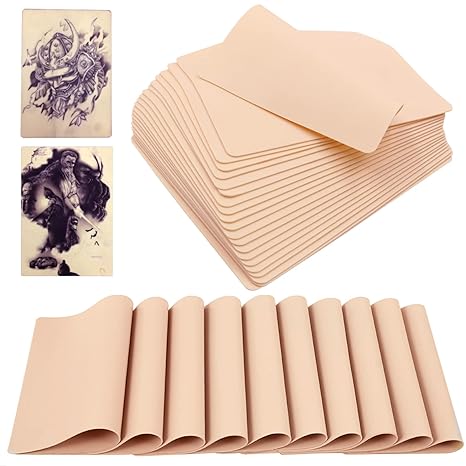
Every tattoo artist remembers their first time.
Not the first time they inked a paying customer. The first time they picked up a machine, hovering over a fake skin, heart pounding, trying to pull a clean line. The smell of fake skin. The weird resistance of cheap rubber. The way the needle would skip or blow out because the material was nothing like real flesh.
For decades, aspiring tattoo artists practiced on pig skin (unpleasant, limited supply) or cheap synthetic sheets that felt more like conveyor belts than human tissue. They learned bad habits because the practice medium was unforgiving, unrealistic, or both.
Then came high‑quality silicone practice skins – and the game changed.
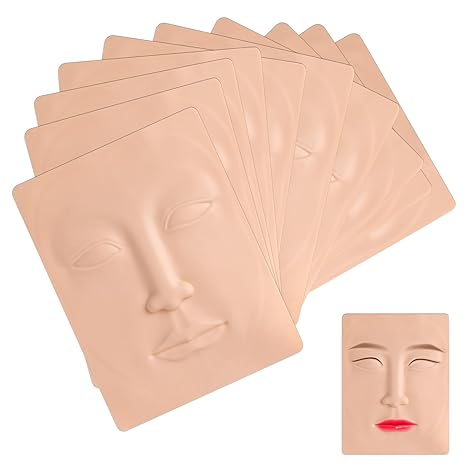
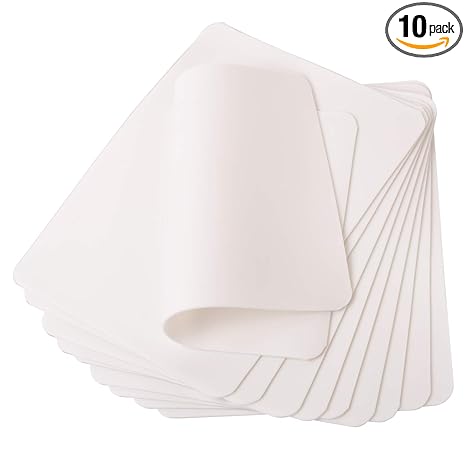
The Rayyl 10‑Piece Tattoo Practice Skin Set represents the gold standard of this new generation. Each 7.4”×5.6” sheet is made from soft, stretchable, skin‑like silicone that behaves eerily like the real thing. Both sides are blank, giving you double the canvas. And with 10 individually packaged sheets, you have a semester’s worth of practice at your fingertips.
Whether you are a complete beginner learning to hold a machine, or an experienced artist testing a new needle configuration or ink, Rayyl practice skins are the closest you can get to real skin without a consent form. Here is why.

Part One: The Package – 10 Individual Sheets, Endless Possibilities
Let’s start with what you get.
10 pieces of tattoo practice skin, each measuring 7.4 inches by 5.6 inches – roughly the size of a large postcard or a small tablet. That is enough surface area for a detailed palm‑sized design, several small practice lines, or a single complex portrait element.
Individual packaging – each sheet is wrapped separately. This is a thoughtful detail. It means you can open one sheet at a time without exposing the others to dust, light, or damage. If you are a traveling artist or a student building a practice kit, you can toss a few sealed sheets into your bag without worrying about them getting scratched or dirty.
Double‑sided blank canvas – both sides of each sheet are usable. That is 20 total practice surfaces. One side for outlining practice, flip it over for shading exercises. Or do a design on one side, and if you make a mistake, flip it and start fresh. The blank surface gives you complete freedom – no pre‑printed lines, no distracting logos, just pure white/translucent silicone ready for your ink.
The size is deliberately chosen. At 7.4”×5.6”, the sheets are large enough to accommodate multiple small tattoos or one medium piece, but small enough to hold comfortably in your non‑dominant hand while you work. You can also wrap the sheet around a curved object (like a bottle or a rolled towel) to practice contour tattooing – more on that later.
For beginners, 10 sheets provide a generous practice buffer. You will make mistakes. You will pull shaky lines. You will overwork the shading. That is fine – that is the point of practice. With 10 sheets, you have permission to fail, learn, and improve without wasting expensive materials.
For experienced artists, 10 sheets allow you to test new techniques, experiment with different ink brands, or dial in a new machine configuration before committing to a client’s skin.

Part Two: Skin‑Like Quality – The Closest You Can Get Without a Volunteer
The most critical feature of any practice skin is how closely it mimics real human skin. Cheap practice skins are too hard, too slippery, or too rubbery. They do not stretch. They do not accept ink the way real skin does. As a result, you learn techniques that do not translate to actual tattooing.
Rayyl has invested in high‑quality silicone that is both soft and stretchable. Let’s break down what that means in practice.
Softness: Real skin has give. When you press a needle into skin, it depresses slightly before the needle penetrates. A practice skin that is rock‑hard will teach you to press too hard, leading to blowouts on real clients. Rayyl’s silicone has a soft, forgiving feel that mimics the resistance of living tissue.
Stretchability: Skin stretches. When you tattoo a curved body part – a forearm, a calf, a ribcage – you need to learn how to stretch the skin with your non‑machine hand to create a flat, taut surface. Rayyl silicone can be stretched gently, allowing you to practice this crucial skill. You can even wrap the sheet around a cylindrical object to simulate a limb.
Ductility: The product description mentions “great ductility” – meaning the silicone can be deformed and return to its shape. This is important for practicing on curved surfaces without tearing the practice skin.
Skin‑like touch feeling: The surface texture is not slick or glossy. It has a subtle grip that feels similar to clean, dry skin. Ink stays where you put it. Needles penetrate with realistic feedback. When you wipe away excess ink, the surface behaves like skin – no weird smearing, no ink pooling.
Non‑toxic and harmless: The silicone is made without poisonous additives. You are not breathing in chemical fumes while you practice. And because it is non‑toxic, you can handle it for hours without skin irritation – something you cannot say for some cheap vinyl practice skins.
Durable and reusable: Each sheet can be used multiple times. You can practice, wipe it clean (with green soap or alcohol), and practice again. Because the silicone is resilient, it does not develop permanent gouges or tears unless you really dig in. This means one sheet can last through dozens of practice sessions.
For beginners, the skin‑like quality builds muscle memory that transfers directly to real clients. For experienced artists, it provides a reliable testing ground that does not lie.

Part Three: Easy to Use – Flexible, Contourable, and Forgiving
A practice skin is only useful if it is easy to work with. Rayyl has designed their silicone sheets with the artist’s workflow in mind.
Flexibility: The sheet is thin enough to be flexible but thick enough to hold its shape. You can lay it flat on a table, tape it to a practice stand, or hold it in your hand. Because it is flexible, you can also wrap it around an object – a foam roller, a water bottle, a rolled towel – to give it a curved contour. This is essential for learning how to tattoo arms, legs, and other rounded body parts.
Wrap it around the object giving it the contour your desire – that is a direct quote from the product description, and it is a feature that separates Rayyl from rigid practice skins. You can create a 3D practice surface that mimics the curve of a bicep or a calf. This allows you to practice needle angles, hand positioning, and stretch techniques in a realistic context.
Easy to clean: After practicing, you can wipe the skin down with green soap and a paper towel. Excess ink comes off easily (though some staining is normal – that is how you track your progress). The silicone does not absorb ink the way real skin does, so you can reuse the sheet many times.
No special preparation: Unlike some practice skins that require you to apply a transfer paper or stencil solution, Rayyl silicone takes stencil transfer easily. You can draw your design on transfer paper, apply it to the skin with stencil stuff or a similar product, and it will hold. The smooth but slightly tacky surface grabs the stencil without smudging.
Realistic feedback: When you pull a line, you can feel the needle’s vibration through the silicone. You can see if you are going too deep (the line will be raised or blown out) or too shallow (the line will be faint or skip). You can practice shading with a mag needle and see the gradient build. Because the silicone is translucent (or opaque white), you can even hold it up to light to check needle penetration depth.
For beginners, the learning curve is gentle. For experienced artists, the realism allows for meaningful practice that improves actual client work.

Part Four: Widely Application – From Outlining to Shading, Machine Testing to Portfolio Building
A practice skin is not just for “practicing.” It is a multi‑purpose tool for every stage of a tattoo artist’s career.
For beginners: Learn the fundamentals – how to hold the machine, how to stretch skin, how to pull a straight line, how to pack black, how to whip shade. Use one sheet for lines only, another for shading exercises, another for lettering. Because the sheets are double‑sided, you can practice 20 separate exercises with the 10‑sheet set.
For intermediate artists: Practice more complex techniques – color packing, smooth gradients, fine line details, realism, geometric patterns. Test different needle configurations (liners, magnums, round shaders, curved magnums) to see how each behaves. Learn how different hand speeds affect line weight and saturation.
For experienced artists: Use Rayyl practice skins to test new tattoo machines. Before you use a new rotary or coil machine on a client, dial it in on silicone. Test voltage settings, give, and stroke length. Test new ink brands – see how they heal (simulated by letting the practice skin sit for a day), how they spread, how they look when packed. Test new needle brands – compare sharpness, consistency, and ink flow.
Save your artwork as progress: One of the most satisfying aspects of using Rayyl skins is that you can keep your best practice pieces. Unlike real skin, which walks away with the client, a practice skin can be stored in a portfolio. You can date it, label it, and look back months later to see how much you have improved. You can also show your best practice pieces to potential mentors or employers as proof of your skill.
Show off your different tattoo skills: The blank double‑sided sheets allow you to create a mini “flash sheet” of your abilities – one side for black and grey realism, the other for traditional Americana. Or use multiple sheets to build a portfolio of different styles. Because the sheets are uniform and clean, they present well in photos or in person.
Test new techniques without risk: Trying a new shading method? Not sure if that new liner needle will cause blowouts? Practice on Rayyl silicone first. The cost of a mistake is zero – just grab another sheet or flip to the other side.
Train apprentices: If you are a shop owner, Rayyl practice skins are the perfect training material for your apprentices. They are inexpensive enough to supply in bulk, realistic enough to provide meaningful practice, and safe enough that you do not have to supervise every second (unlike practicing on pig skin or fruit).

Part Five: Real‑World Practice – How to Get the Most Out of Your Rayyl Skins
Here is a suggested practice regimen using the 10‑sheet set.
Sheet 1 – Line control: Draw straight lines, curved lines, and circles. Practice pulling lines at different speeds. See what happens when you go too fast (skip marks) vs. too slow (blowout or oversaturation). Fill the entire sheet with line exercises.
Sheet 2 – Depth control: Practice getting consistent needle depth. Use a magnifying glass to check penetration. Tattoo dots of varying depths, then cut the skin open (on a spare corner) to see how deep you actually went.
Sheet 3 – Shading: Practice whip shading, pendulum shading, and stipple shading. Create gradients from 0% black to 100% black. Practice smooth transitions.
Sheet 4 – Color packing: Use cheap color ink (or just black) to practice packing a solid fill. Work on saturation without overworking the skin (which would cause scaring on a real client – on silicone, it will show as chewed‑up surface).
Sheet 5 – Lettering: Practice script, block letters, and decorative fonts. Focus on consistent line weight and clean edges.
Sheet 6 – Curved surface: Wrap the sheet around a bottle or a rolled towel. Practice tattooing on the curve. Pay attention to your needle angle and hand position.
Sheet 7 – Machine tuning: Use this sheet exclusively to test different voltage settings on your machine. Note the optimal settings for lining vs. shading.
Sheet 8 – Ink testing: Test three different black ink brands side by side. Compare blackness, spread, and ease of packing.
Sheet 9 – Complex design: Tattoo a small, detailed design – a flower, a skull, a portrait. Time yourself. Try to make it as clean as you would on a paying client.
Sheet 10 – Free practice: Use this as your “keeper” sheet. Tattoo your best work, sign it, date it, and add it to your portfolio.
Because each sheet is double‑sided, you effectively have 20 practice sessions. That is months of weekly practice.
Part Six: Why Rayyl? – Team Service and Satisfaction Guarantee
The market is full of cheap tattoo practice skins from unknown sellers. Many of them are low‑quality vinyl that smells like chemicals, tears easily, and teaches bad habits. Others are overpriced “professional” skins that cost $10 per sheet.
Rayyl strikes a balance: high‑quality silicone at a reasonable price for a 10‑pack. But the price is only part of the value. The real differentiator is customer service.
The Rayyl Team explicitly states: “We are dedicated to provide the 100% satisfaction guarantee. If you have any questions about Rayyl tattoo practice skin, please contact us anytime, we will help you to solve your problems as soon as possible.”
What does that mean for you?
- Damaged or defective sheets? Contact them. They will make it right.
- Not satisfied with the skin‑like feel? Reach out. They will work with you.
- Have questions about how to use the product? They will answer.
This matters because buying practice materials online can be frustrating. You might receive a pack where some sheets are bent, or the surface is sticky, or the thickness is inconsistent. A brand that stands behind its product with responsive customer service is worth choosing over a cheaper, no‑name alternative.
Additionally, Rayyl products are developed with the user in mind. They are not a random factory producing generic silicone. They seem to understand the needs of tattoo artists – which is why they made the sheets double‑sided, individually packaged, and the perfect size for wrapping around contours.
Part Seven: Who Are These Practice Skins For?
For complete beginners: You have never held a tattoo machine. You watched YouTube videos. You want to learn without hurting anyone. Rayyl skins are your first canvas. They forgive your shaky hands. They let you make mistakes. They teach you the fundamentals.
For apprentice tattoo artists: You are working under a mentor, but you need to practice outside of shop hours. Rayyl skins allow you to drill specific skills – lining, shading, color packing – on a realistic medium. You can bring your practice sheets to your mentor for critique.
For experienced artists learning new styles: You have been doing traditional Americana for years, and you want to learn realism. Or you are a black and grey artist who wants to learn color. Practice on Rayyl skins before offering new styles to clients.
For artists testing new equipment: New machine? New needles? New ink? Test on silicone. Find the optimal settings. Avoid unpleasant surprises on a client’s skin.
For traveling artists: The 10 individually wrapped sheets are easy to pack. You can practice in hotel rooms, at conventions, or while visiting family. No need to bring bulky equipment – just a machine, a power supply, and a few Rayyl sheets.
For teachers and mentors: Buy a bulk pack of Rayyl skins for your students. They are inexpensive enough that you can supply them regularly, and realistic enough that students actually learn transferable skills.
Part Eight: The Verdict – Your Practice Deserves Better Than Cheap Rubber
Tattooing is a craft that requires thousands of hours of deliberate practice. The quality of your practice materials directly affects the quality of your learning.
Cheap, hard, unrealistic practice skins teach you bad habits. You learn to push too hard because the fake skin resists. You learn to ignore needle depth because the material does not react like real tissue. You waste time and money on materials that do not prepare you for actual clients.
Rayyl silicone practice skins are different. They are soft, stretchable, and skin‑like. They accept ink realistically. They allow you to practice on curved surfaces. They are double‑sided, giving you twice the canvas. They come in a 10‑pack, individual sealed, so you can practice for months.
And if you have any problem, the Rayyl team promises to make it right.
Whether you are a first‑time beginner nervously holding a machine for the first time, or a seasoned artist fine‑tuning a new technique, the Rayyl 10‑piece practice skin set is the smartest investment you can make in your craft.
Because the only thing better than practicing on silicone is practicing on skin. And until you are ready for that, Rayyl is the next best thing.
Order your Rayyl Tattoo Practice Skins today – and start pulling lines like a pro.